
Drone de-icing and surface heating with graphene foil
BLACKLEAF BLACKHEATER graphene heating foils protect drone wings, batteries, and electronics from ice and frost. The Voltera V-One and NOVA systems allow you to print your own heater on composite or fabric. We've collected designs, test results, and finished products.
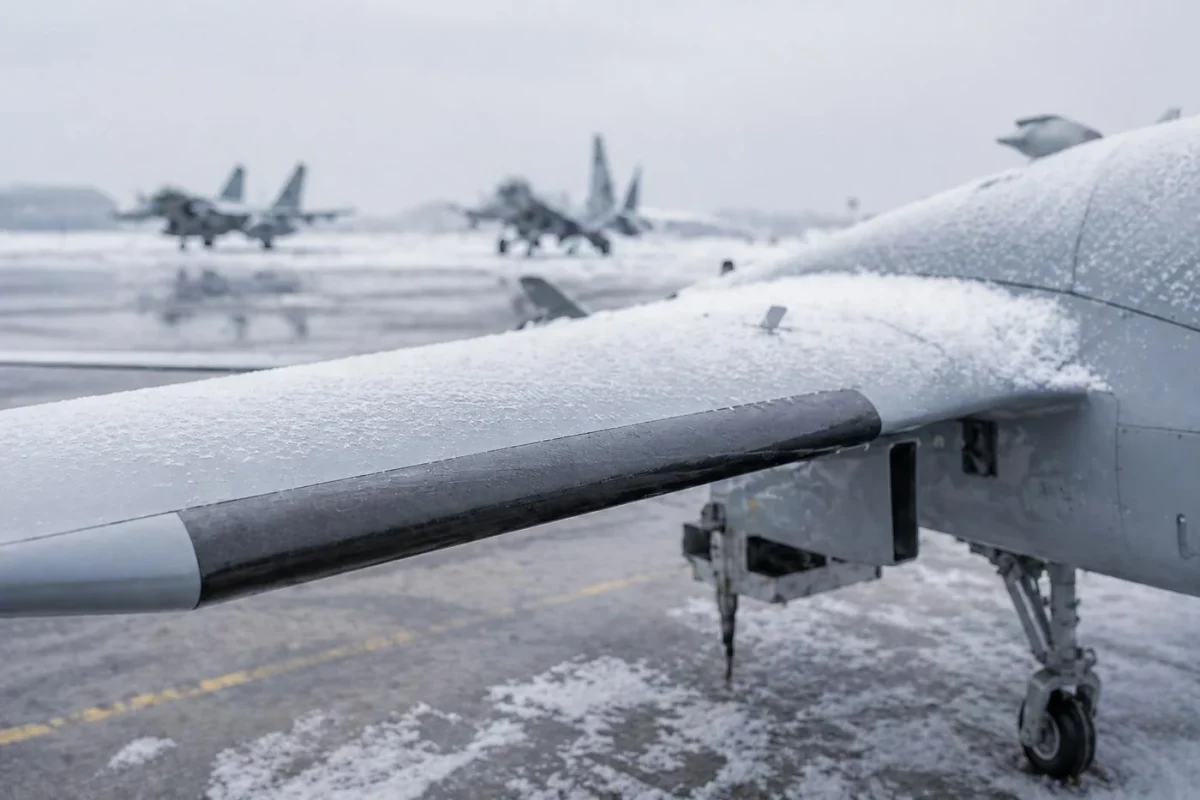
Heating foil on the leading edge of a UAV wing (BLACKLEAF visualization).
Heat exactly where the drone needs it
Ice on the leading edge alters aerodynamics, and frost shortens battery life. A thin graphene foil heats the entire surface evenly and weighs only a few grams, so it can be added without modifying the airframe.
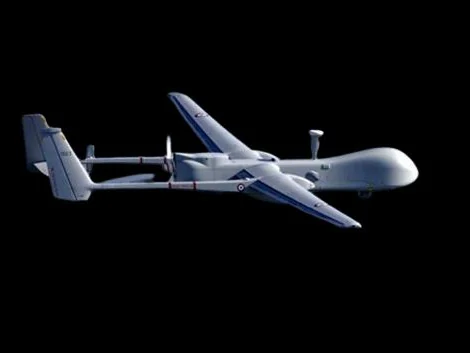
De-icing of wings and tailplanes
The self-adhesive GPAD 20+ foil (500 × 50 mm, 12 V, 20 W) is applied to the leading edge. The foil can be cut to size according to the manufacturer's recommendations.
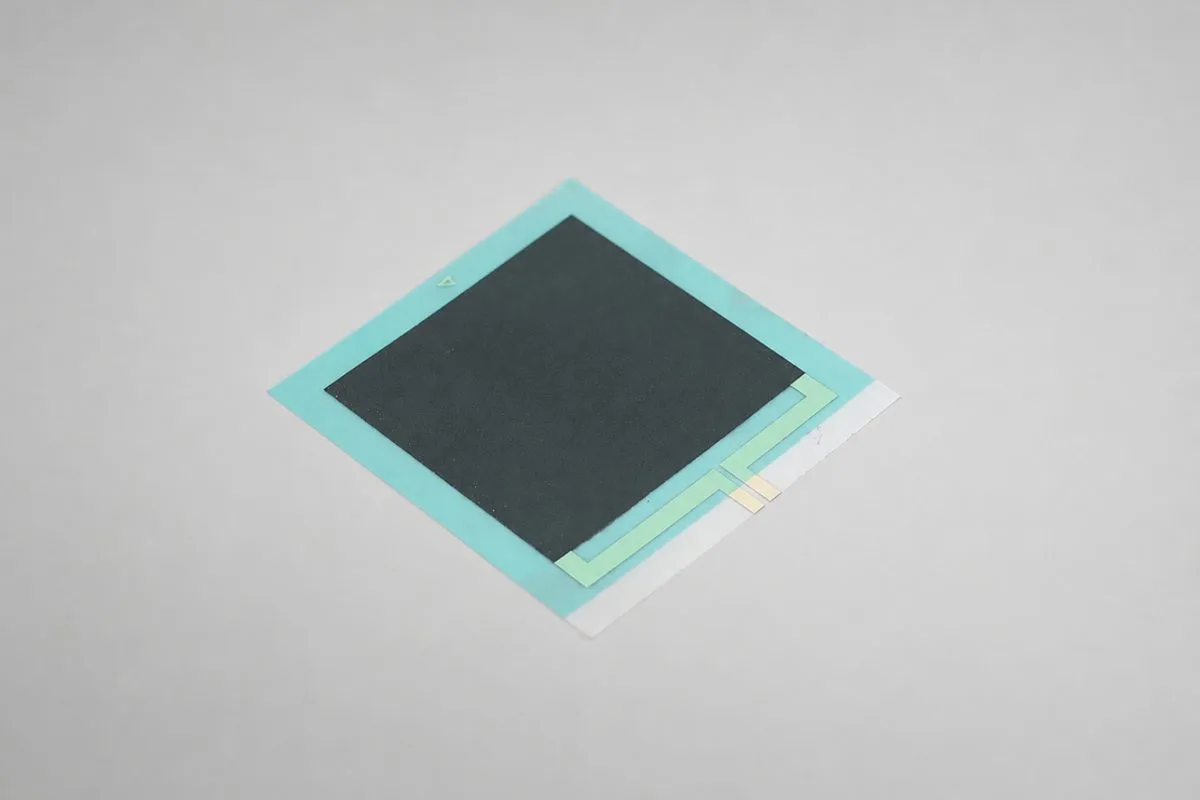
Battery and on-board electronics
Foil placed under the package or module can help maintain operating temperature in freezing temperatures. The GPAD 30+ (100 × 100 mm, 12 V, 4 W) is suitable for small packages.
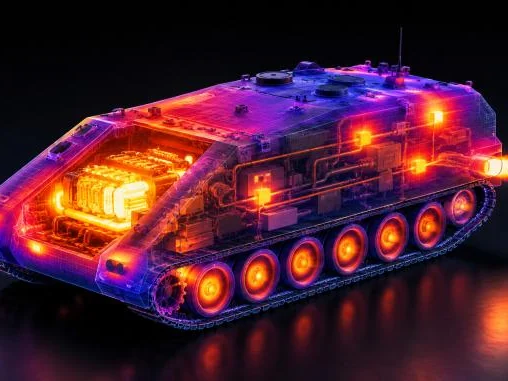
Thermal decoy and controlled thermal signature
The manufacturer indicates the foil for checking the infrared signature, e.g. as a thermal decoy reproducing the thermal trace of an object.
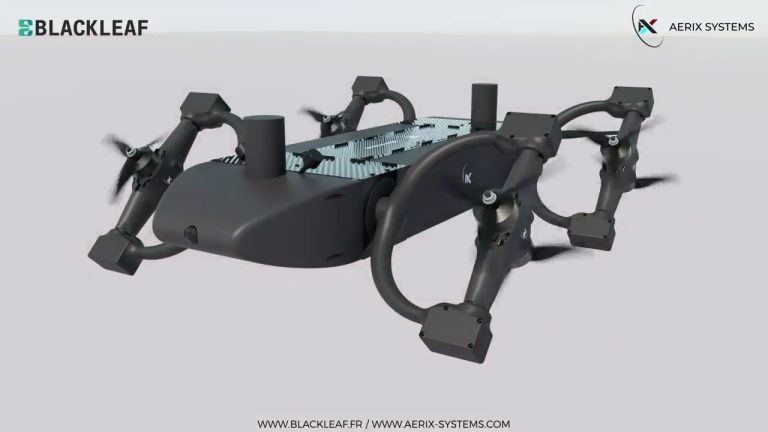
AXS-μ1 Drone with BLF SHIELD
AERIX SYSTEMS presented a drone with the graphene BLACKLEAF system reducing the radar signature: modular, lightweight and fully passive (UAV SHOW 2025).
BLACKHEATER GPAD heating foils – parameters and applications
Five ready-made graphene foils, operating at ambient temperatures from -40°C. An external temperature control system is required for operation – for the GPAD 20+, the manufacturer specifies a sensor and an ON/OFF or PID controller.
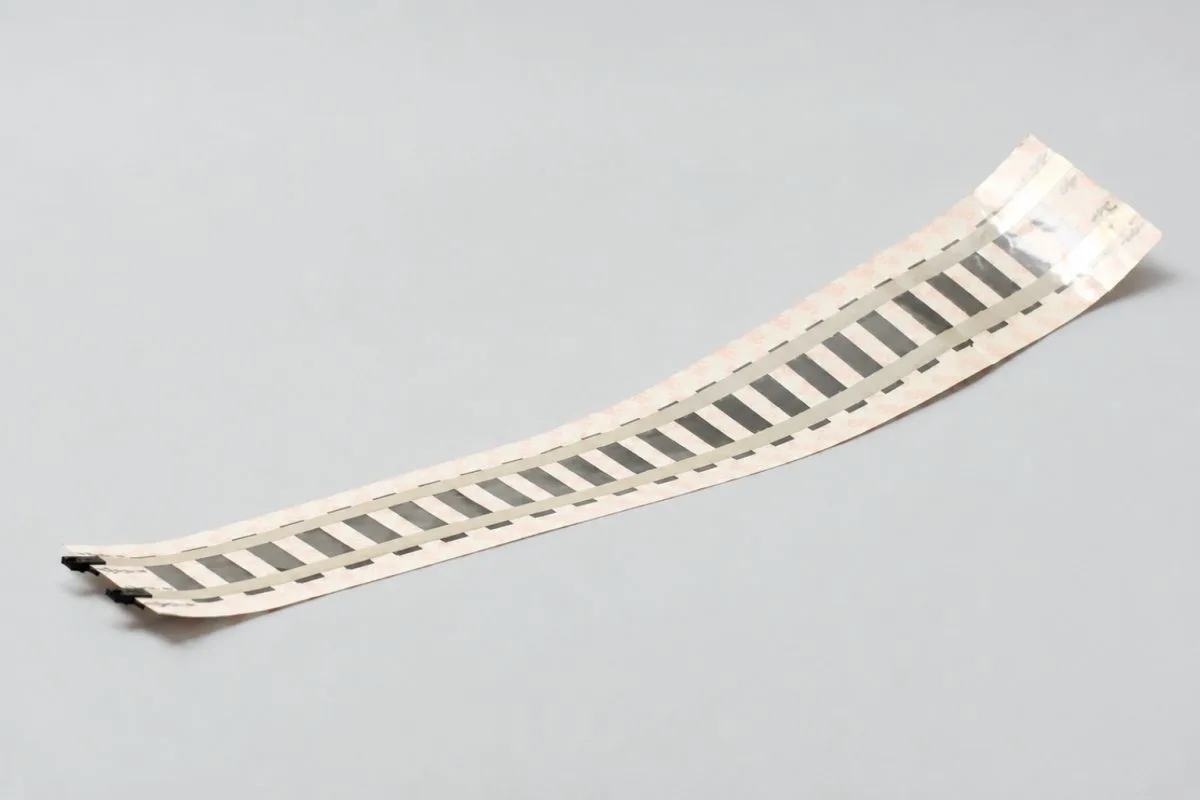
GPAD 20+ – drones and UAVs
Leading edge de-icing, battery and electronics heating, thermal decoy.
GPAD 30+ – batteries and electronics
Local heating of modules, control cabinets and protection against condensation.
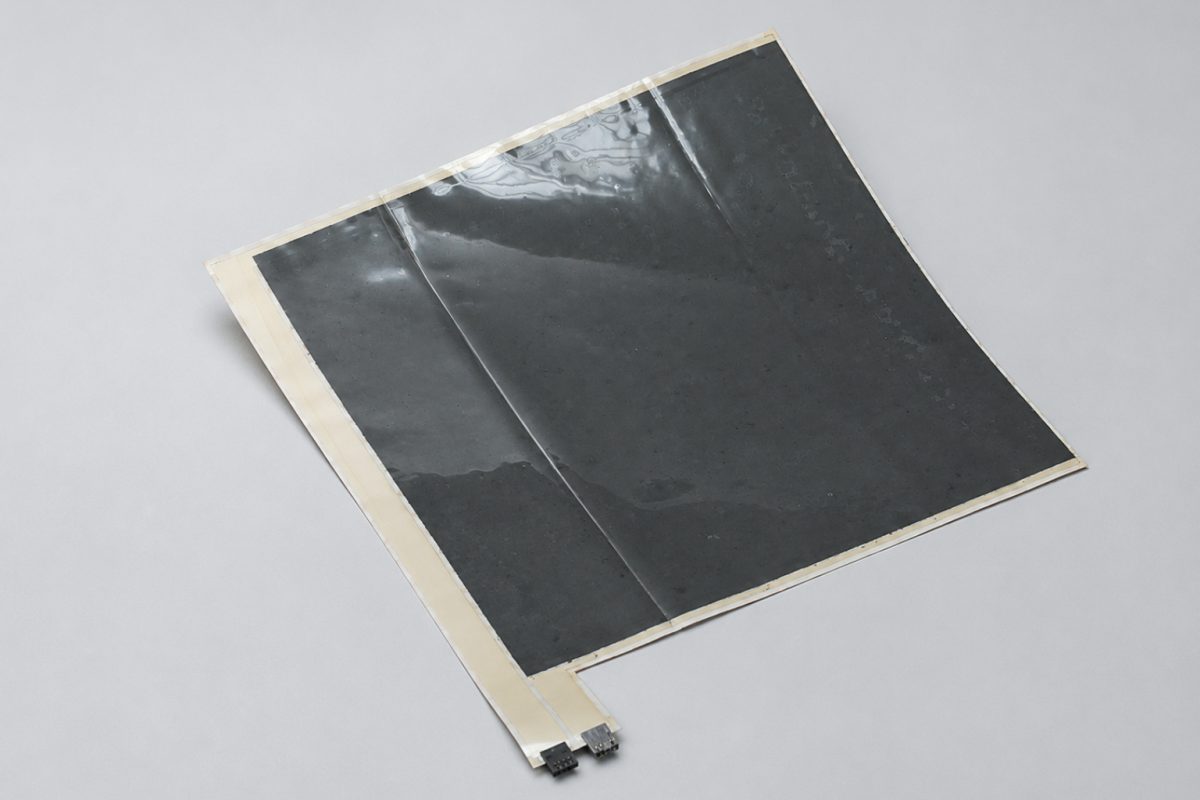
GPAD 40+ – large surfaces
Batteries, electrical cabinets and condensation protection for 48V power supply.
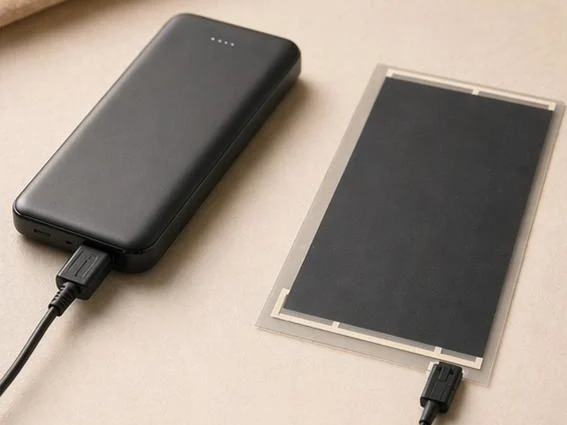
GPAD 10+ – powered by a power bank
Heated clothing and personal comfort; 5V power supply via USB-C.
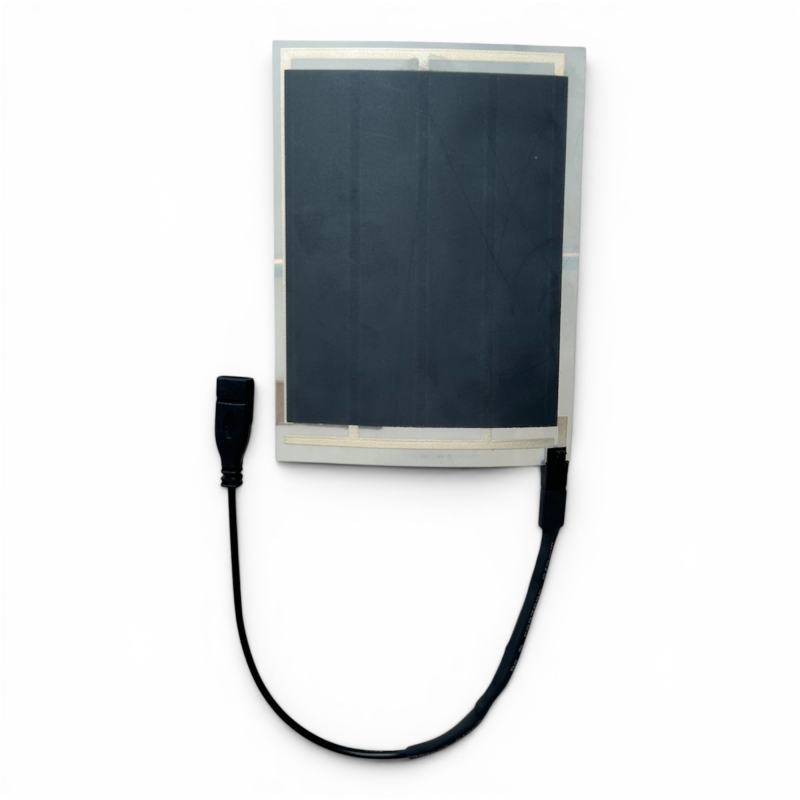
GPAD 11+ – OEM Integration
5V version for integration into clothing and devices.
Custom foil
When no format fits, BLACKLEAF designs a film to your size, shape, tension and strength.
- voltage from 3 to 480 V
- power density from 0,01 to 6 W/cm²
- up to 200 °C at peak
- thickness 50–300 µm, minimum bend radius 2 mm
- PET, TPU, PEI, PU, textiles
Parameters according to product cards in the Chemikonics store; surface temperature at manufacturer's reference conditions.
How does the BLACKHEATER foil behave in the de-icing test?
BLACKLEAF data from the de-icing system prototype: 300 × 300 mm film on PET with silver electrodes (48 V, 0,09 W/cm², up to 120 °C), presented at TechBlick Berlin 2026.
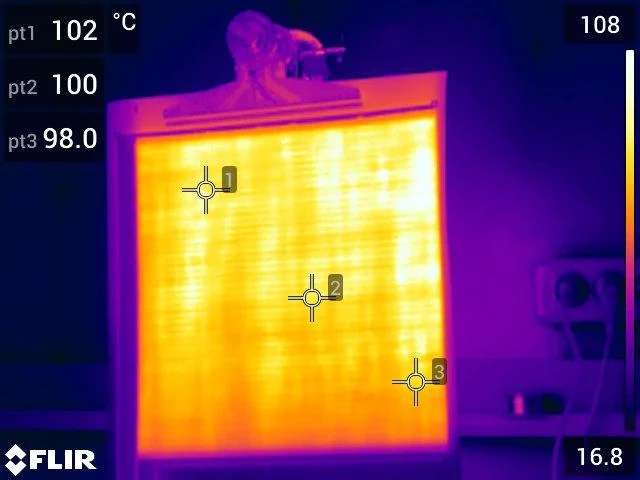
Thermogram of 300 × 300 mm foil: 102, 100 and 98 °C at measuring points.
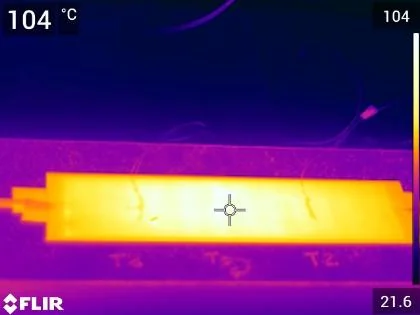
Thermogram in the endurance test – after 7 hours of operation at approx. 100 °C.
Graphene Surface Heating Beyond Aviation
The same technology heats large surfaces and individual infrastructure elements. BLACKLEAF calls this "active surfaces": heat is directed where it's needed, rather than heating the entire surrounding area.
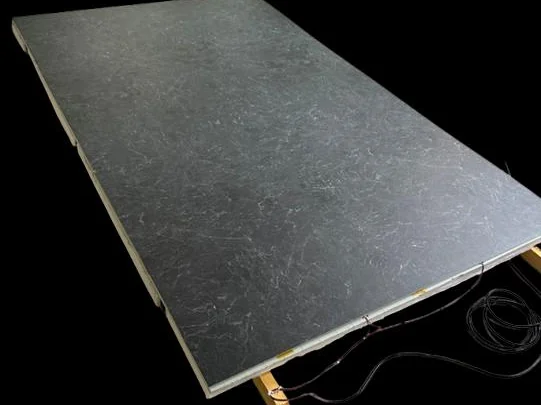
Flooring in public transport
Prototype with 9 heaters of 3200 cm² each (totalling 2,9 m²) with uniform temperature distribution confirmed by a thermal imaging camera.
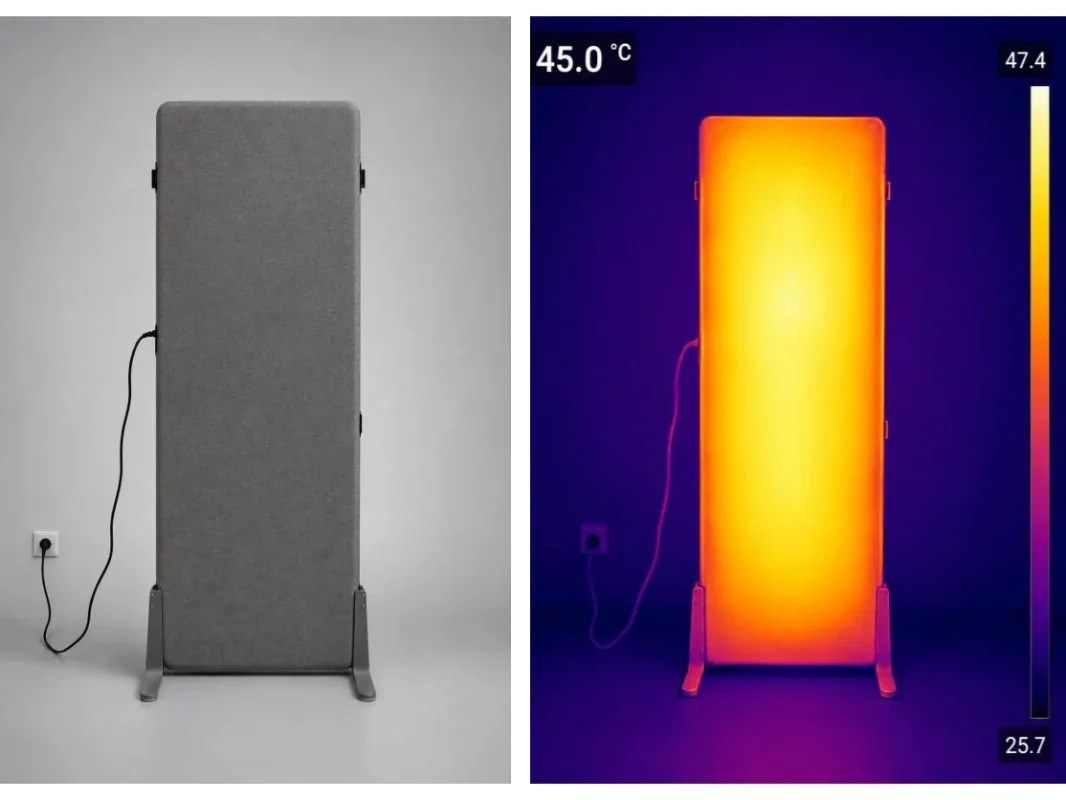
Radiant panel 1800 × 700 mm
From concept to product: a 230V, 500W panel that heats to 45–50°C. The thermogram shows a uniform temperature field.
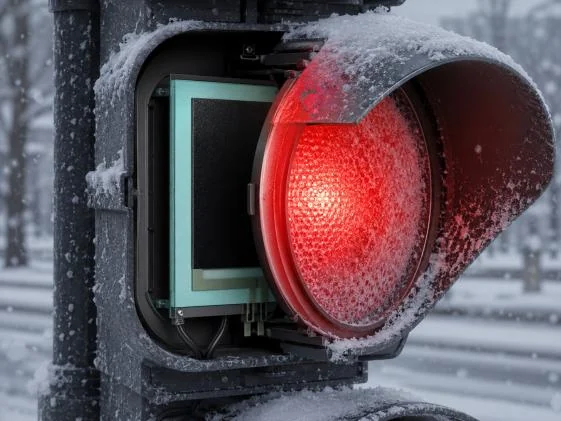
Signals and control cabinets
GPAD 30+ and 40+ foils heat electrical cabinets and protect electronics from condensation; the manufacturer also displays them behind the signaling device glass.
Railway turnouts
The foil is stuck to or near the turnout elements, where ice forms, instead of heating the entire area with gas or air.
Halls and warehouses
Foil under tiles, planks, or vinyl creates heating zones without the 8–12 cm of screed required for hydronic heating. According to BLACKLEAF, heating cables can use up to 30% more energy than foil heating in comparable applications.
Grain silos
Heating panels heat cold spots on the walls, cones and channels of the silo where condensation collects, protecting the quality of the grain.
Heat tracing of pipes and tanks
Foil strips are wrapped or laminated directly onto pipes, valves and tanks, under insulation – without multiple cable connections.
Heaters printed on composites and fabrics
If you need a heater with an unusual shape or integrated into a structure, you can print it yourself. Voltera prints conductive inks without masks or screens, so a prototype can be created in a day.
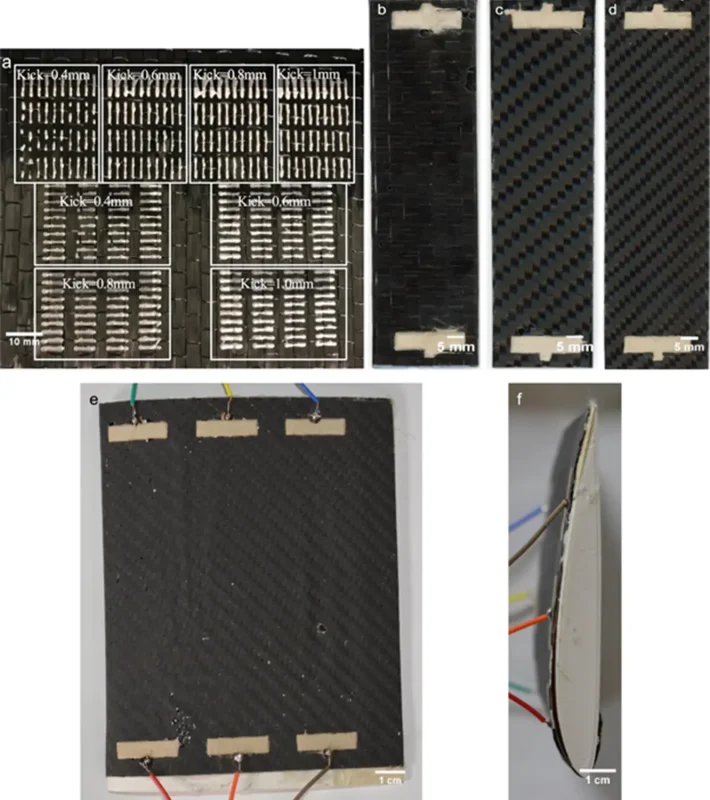
York University – Self-Heating UAV Wing
Dr. Gerd Grau's team printed silver electrodes on carbon fiber fabric using the V-One. After infusing the wing with resin, the resulting element acts as a de-icing heater. The publication describes temperature measurements, but does not include tests in icy conditions.
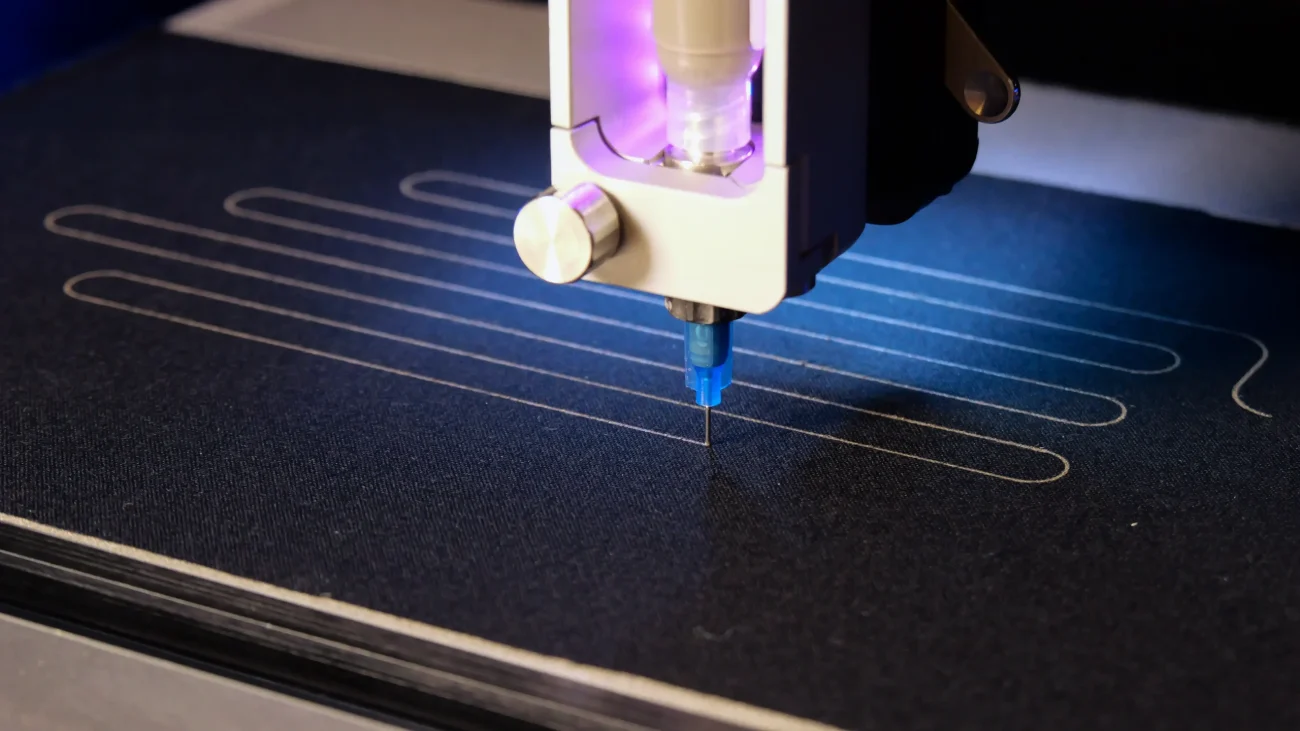
NOVA – heater on a cotton glove
NOVA printed a heating path using ACI SH5025 ink directly onto the fabric. At 12V, the glove reaches approximately 40°C, and higher voltages increase the temperature.
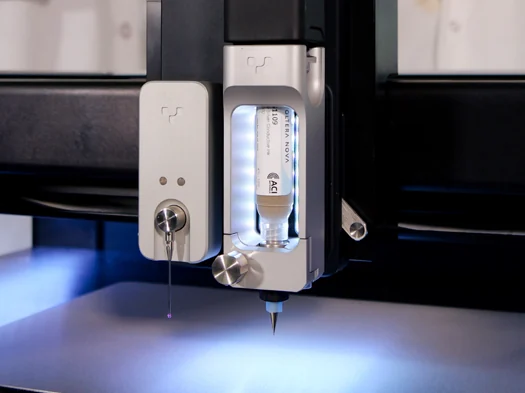
NOVA – flexible heaters and thermal pastes
A circuit made of stretchable silver ink on TPU, sewn into a pocket, heated to 45–50°C in one minute; printing took less than 15 minutes. NOVA also dispenses thermal pastes and gels onto the components.
Ready-made foil, custom foil or your own printing?
Ready GPAD foil
The fastest way to flight or bench testing. Select format and voltage from the table above.
BLACKHEATER foil made to order
Own shape, voltage and power – designed and manufactured by BLACKLEAF.
Voltera NOVA
Printing heaters, sensors and antennas on fabrics, foils and composites in our own laboratory.
Voltera V-One
Prototypes of controllers and on-board electronics and printing of electrodes on carbon fiber.
See projects in action
AXS-μ1 drone with graphene BLF SHIELD
AERIX SYSTEMS and BLACKLEAF, UAV SHOW 2025 (Bordeaux).
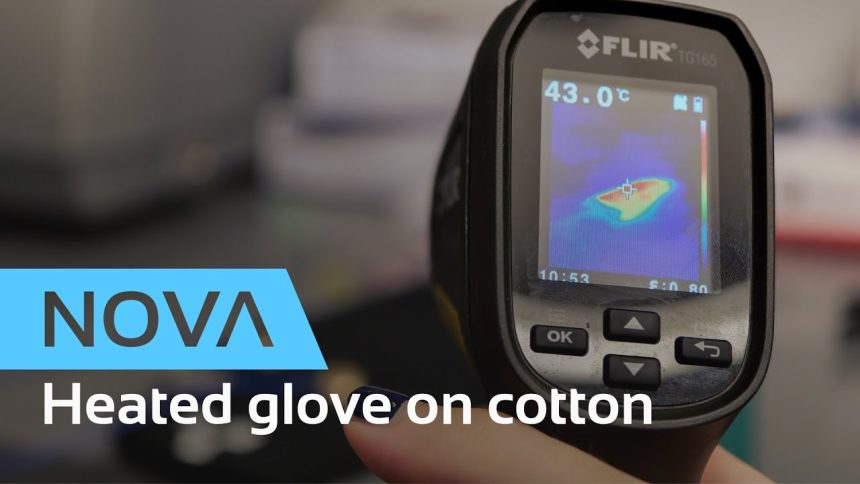
Heated glove printed on cotton
Voltera NOVA prints a heater from conductive ink on fabric.
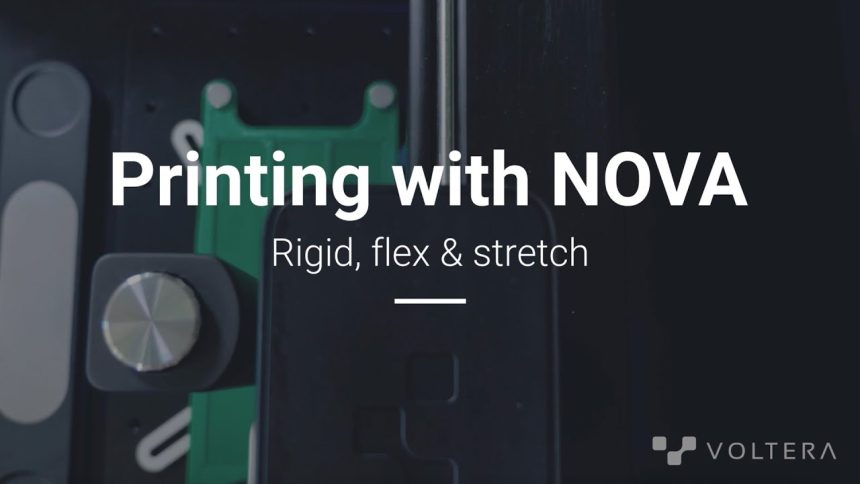
NOVA: rigid, flexible and stretchable electronics
Overview of materials and substrates on which NOVA prints.
What does cooperation with Chemikonics look like?
1. Describe the application
Please describe what you want to heat (wing edge, battery, wardrobe, floor), your voltage and how much space you need.
2. We choose a solution
We offer ready-made GPAD foil, custom foil from BLACKLEAF or your own printing on Voltera.
3. We prepare an offer
You'll receive a personalized offer with technical data sheets. Terms and conditions are confirmed upon request.
Questions about drone de-icing and heating foils
How does de-icing a drone with heating foil work?
A thin graphene foil is adhered to the leading edge of the wing or tail. Current flowing through the graphene layer generates heat (Joule effect), which is intended to prevent ice buildup. For the GPAD 20+, the manufacturer requires an external temperature sensor and controller (ON/OFF or PID).
Which BLACKHEATER foil should I choose for my drone?
The GPAD 20+ was designed with drones in mind: 500 × 50 mm format, 12 V DC, 20 W, 295 µm thickness and 15 g weight. The smaller GPAD 30+ (100 × 100 mm, 12 V, 4 W) is also suitable for heating the battery and electronics.
How much power does the GPAD 20+ foil consume?
The nominal current is 1,6 A at 12 V (power 20 W, resistance 7,5 Ω). Heating power must be factored into the drone's energy budget.
At what temperature do BLACKHEATER foils operate?
GPAD films operate at ambient temperatures from -40°C; the maximum ambient operating temperature is +120°C or +100°C, depending on the model. GPAD 20+ reaches approximately 95°C on the surface at 20 W under the manufacturer's reference conditions.
Does the test data confirm de-icing effectiveness?
BLACKLEAF tests are performed on flat samples: temperature uniformity (±2°C), 7 hours of operation at approximately 100°C, and heating cycles. De-icing effectiveness on a specific wing must be confirmed through in-house testing, e.g., in a climate chamber or in flight.
Can I order foil in my own shape?
Yes. BLACKLEAF designs films according to customer parameters: voltage from 3 to 480 V, power density from 0,01 to 6 W/cm², thickness 50–300 µm, substrates PET, TPU, PEI, PU or textiles.
Can the Voltera V-One print a heater?
Yes. York University used the V-One to print silver electrodes on carbon fiber fabric, which was used to create a self-heating element for a UAV wing. For heaters on fabrics and stretchable substrates, the NOVA is more suitable.
Does Chemikonics list film and printer prices?
No. We prepare individual offers after determining the intended use and quantity. Use the "Request a Quote" button.
Publications and research materials
- Ba H., Truong-Phuoc L., Romero T., Sutter C., Nhut J.-M., Schlatter G., Giambastiani G., Pham-Huu C., Lightweight, few-layer graphene composites with improved electro-thermal properties as efficient heating devices for de-icing applications, Carbon 182 (2021) 655–668. DOI →
- Ba H., Truong-Phuoc L., Papaefthimiou V., Sutter C., Pronkin S., Bahouka A., Lafue Y., Nguyen-Dinh L., Giambastiani G., Pham-Huu C., Cotton Fabrics Coated with Few-Layer Graphene as Highly Responsive Surface Heaters and Integrated Lightweight Electronic-Textile Circuits, ACS Applied Nano Materials 3(10) (2020) 9771–9783. DOI →
- Idris MK, Qiu J., Melenka GW, Grau G., Printing electronics directly onto carbon fiber composites: unmanned aerial vehicle (UAV) wings with integrated heater for de-icing,Engineering Research Express 2(2) (2020) 025022. DOI →
Related pages
Drone electronics
Article: How to heat a battery, de-ice a surface, and quickly prototype electronics.
Graphene inks and materials
NEOBLACK water-based inks and BLACKHEATER heating foils from BLACKLEAF.
Interested in heating foils or drone de-icing?
Describe your project: dimensions, power supply voltage, and substrate. We'll tell you whether a ready-made GPAD foil, a custom BLACKHEATER foil, or a custom print on Voltera NOVA will work.
Ask for an offer
Drones and Heating – Voltera and Blackleaf