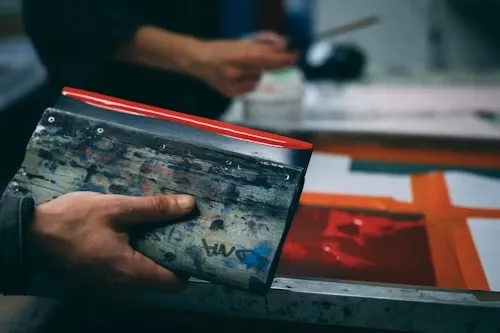
Screen printing is one of the oldest and most commonly used printing techniques, valued for its ability to achieve clear, intense colors and exceptional durability. Under the right conditions, prints created using this method retain their appearance for years, making it an excellent solution for both textiles and other surfaces.
Table of Contents:
- Is screen printing a permanent technique?
- Durability in screen printing – what influences it?
- Screen printing and other printing methods
Is screen printing a permanent technique?
You wonder is screen printing durableOne of the greatest advantages of screen printing is its exceptional durability, which means prints created using this method can withstand everyday use, washing, and even exposure to sunlight. The inks used in screen printing adhere permanently to the material and are abrasion-resistant. Screen printing works particularly well on clothing that is subjected to repeated washing and intensive use. It also performs well on promotional materials such as bags and pouches.
However, it's important to remember that the durability of screen printing also depends on the proper techniques and the experience of the artist. Professionally executed screen printing will last much longer than cheap alternatives or hastily created prints without the proper technology. If durability is important to you, pay attention to the quality of workmanship and the inks used in the printing process.
Durability in screen printing – what influences it?
Regarding screen printing, durability depends on several key factors, one of the most important being the selection of appropriate inks. Screen printing inks are available in various variants, from standard to waterproof or UV-resistant, which are perfect for sportswear and materials exposed to sunlight. High-quality screen printing chemicals guarantees that the print will be resistant to external factors and retain intense colors for a long time.
Another important factor is the quality of the material the print will be applied to. The better the material, the better it will accept the ink. Remember that different surfaces require special preparation – for example, fabrics must be properly stretched to ensure the ink adheres permanently to the fibers.
Screen printing and other printing methods
Compared to other printing methods, such as sublimation, digital printing, or thermal transfer, screen printing is characterized by high durability, especially when used on suitable materials. Techniques like thermal transfer, while less expensive, are less resistant to washing and intensive use, which causes prints to fade and become more susceptible to mechanical damage. Screen printing is more resistant to wear and tear and abrasion.
Another advantage of screen printing over other techniques is its vivid colors. Screen printing inks are intense and deeply saturated, ensuring the visual effect remains clear even after many cycles of use. However, it's worth remembering that each technique has its specific applications – screen printing works best for simple designs dominated by bold colors and contours.
Screen printing is a durable printing technique whose durability depends on several factors, such as ink quality, proper material preparation, and the experience of the artist. Thanks to the use of professional materials and inks, screen printing remains durable for many years. By choosing this technique, you can count on high-quality and long-lasting prints.